

People ask us this constantly, and the honest answer is that we don’t have a method so much as a philosophy. The method changes depending on the child, the mood, the light, and how much sleep everyone got the night before. The philosophy doesn’t. And after years of both personal and commercial natural family photography — of photographing our own three kids as well as families who hire us to document theirs — we can say with some confidence that the philosophy is the only thing that actually works.
There is a particular kind of photograph that most family photographers are chasing without knowing it: the one where everyone in the frame has forgotten that the camera exists. It is the hardest image to make and the easiest to recognise. When you see it, something in you responds before you’ve consciously processed what you’re looking at. The eyes give it away — the direction of the gaze, the degree of relaxation around the mouth, the quality of attention the subject is paying to something other than the lens.
Children are better at forgetting the camera than adults, but not automatically. They need to be helped into forgetting it. And the way you help them is not with technical tricks or distraction techniques — it’s with consistency and restraint.
The camera as furniture
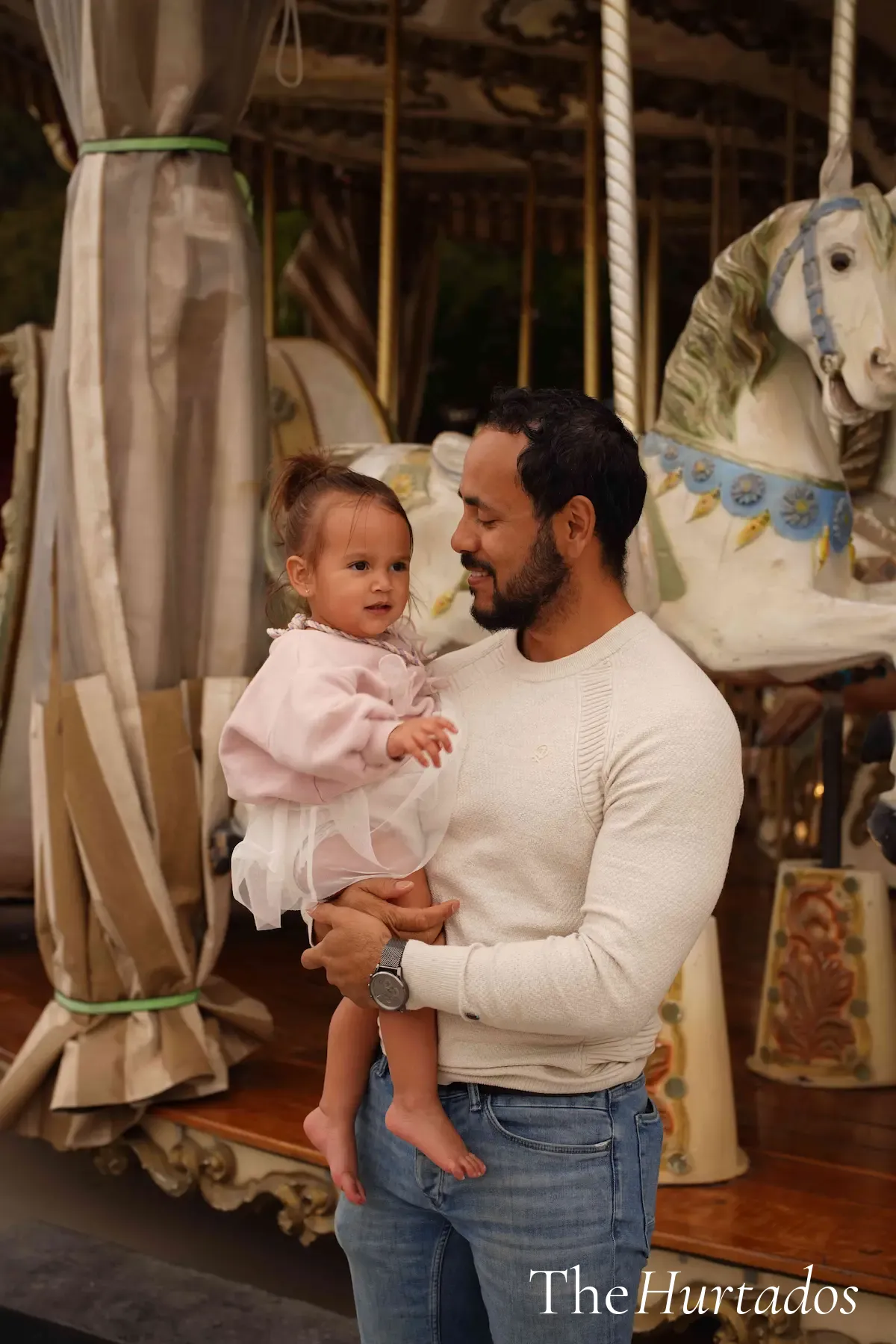
Our children have grown up with a camera in the room. Not pointed at them constantly — but present. The camera sits on the table during breakfast. It comes on the walk. It appears and disappears without event. Over time, and this process took years not days, it has become furniture. A thing that is there and sometimes makes a sound, like a chair that occasionally scrapes.
When the camera is furniture, the moment of picking it up is not an announcement. There is no readjustment, no performer’s instinct to present a face. You pick it up and whatever is happening continues to happen. That is the entire trick, and it requires patience that no workshop teaches.
The problem with most family photo sessions is the session itself — the designated hour, the clean clothes, the location chosen for its light. Even when the photographer is skilled, there is a contract everyone has tacitly agreed to: we are doing this now, and the images will look like images. The children know it. They perform. The parents know it. They manage the performance. And the photographer tries to find something real inside an inherently theatrical arrangement.
We are not saying formal sessions don’t produce good images. They do. But they produce a particular kind of image — presentational rather than documentary. Beautiful but slightly removed from the life they’re supposed to be recording. What we are talking about here is a different thing: the image that records the life itself, not a version of it arranged for the camera.
Natural family photography at every age
One of the most common mistakes is treating all children the same. A two-year-old and an eight-year-old inhabit entirely different relationships with a camera, with self-consciousness, and with instruction. What works for one actively fails with the other.
Under three: photograph the environment
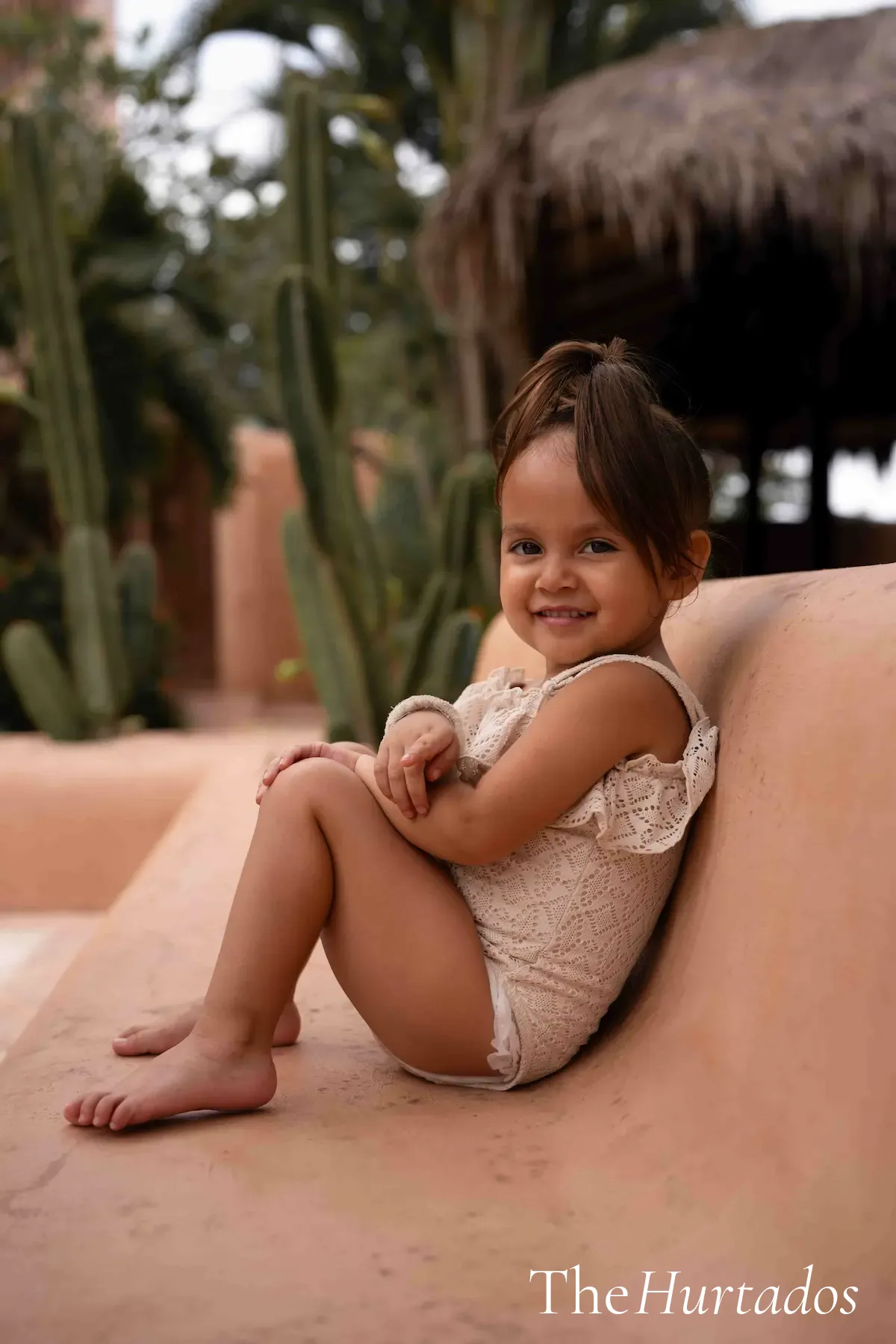
Young toddlers are the easiest subjects and also the most demanding. They have no self-consciousness about the camera — they haven’t developed the performer’s reflex yet. But they also don’t take direction, won’t hold a position, and have no interest in your timing. The approach with very young children is to follow, not direct. Place them in an environment that interests them — a garden, a beach, a pile of objects — and photograph the environment they create. The composition finds itself when you’re watching the right thing.
With Risa Mia, our youngest, the method is almost entirely environmental. We put her somewhere interesting and we wait. The camera is already up. The frame is already roughly set. What changes is the moment inside it. For practical context on what works in Bali specifically with a child this age, our Bali with a Toddler guide covers the logistics side of this.
Three to seven: give them real tasks
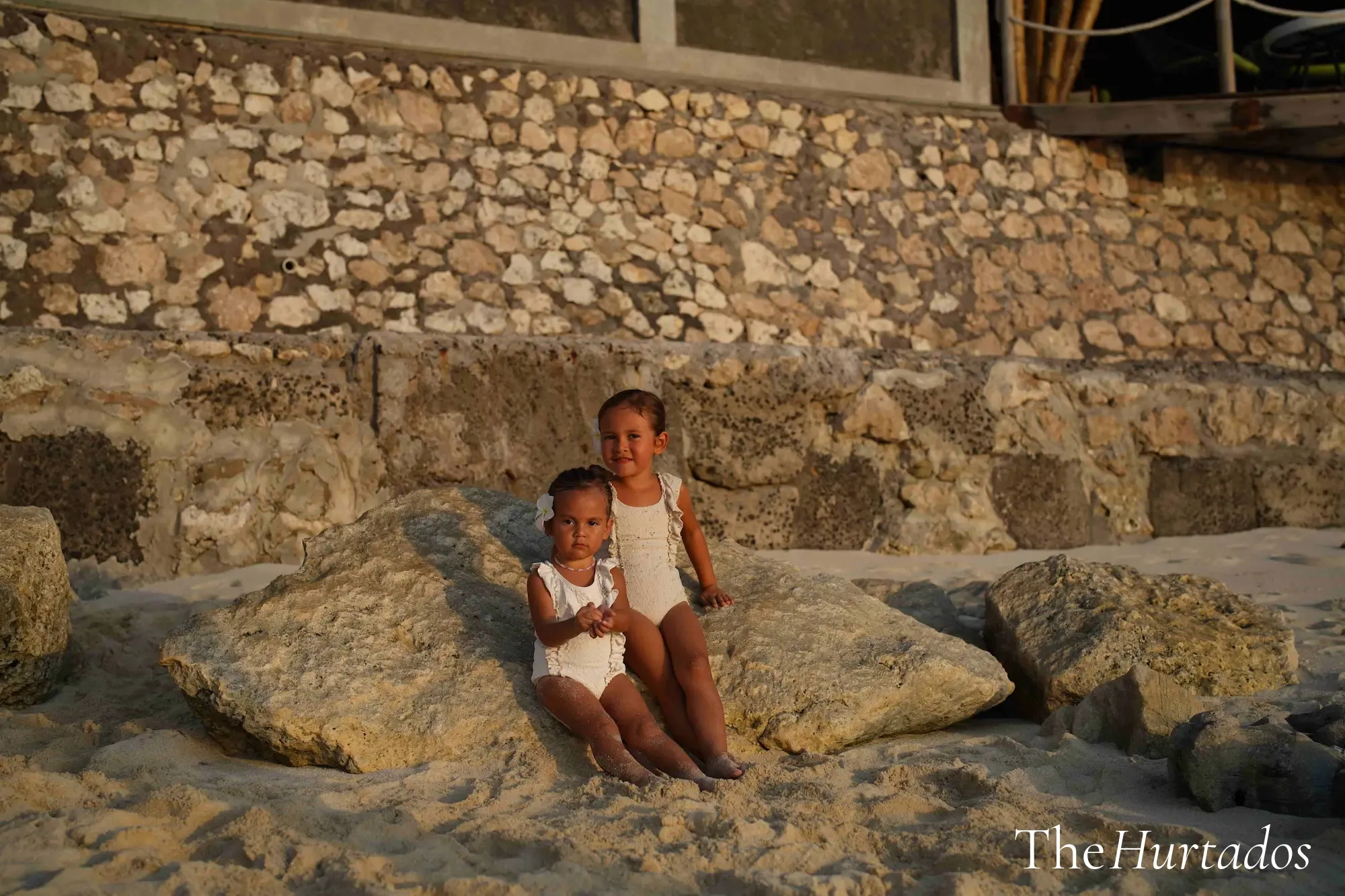
This is the age when self-consciousness starts to arrive, unevenly and unpredictably. A five-year-old might be completely unselfconscious one day and suddenly, inexplicably, a performer the next. The approach that works here — consistently, across children and moods and locations — is the real task. Not “look at me,” not “smile,” not even “look at your sister.” Find the biggest shell. Climb that rock and look for boats. Pour the water into this cup without spilling it.
Ask a five-year-old to look happy and you get a performance that reads as performance in every frame. Ask a five-year-old to find the biggest shell on the beach and you get concentration, discovery, the small private satisfaction of succeeding at something. The camera catches what’s real because something real is happening.
Eight and older: treat them like adults
Older children need a different approach entirely. By eight or nine, most have developed a complex relationship with how they appear in photographs — social media has accelerated this, but it was always there. The method that works is honesty. Tell them what you’re doing and why. Let them see images as you make them. Give them the language to say when they feel uncomfortable and actually respond to it. When a child feels like a collaborator rather than a subject, the results change completely.
Rico, our twelve-year-old, sometimes wants to be photographed and sometimes doesn’t, and both are valid. The images we have of him from years of treating his preferences as real are more interesting than any we could have forced. He trusts the camera now, in the way that furniture is trusted — it’s part of the environment, not a judgment on it. We write about what he actually does in Bali in our Bali with Teenagers guide.
The practical framework: give them something real to do
When we do need to direct — which happens on client shoots where the children are part of the brief — the rule is: never ask them to perform an emotion. Instead, give them a task. A real one, not a mime.
The tasks that work best share a few qualities. They require genuine attention, not performed attention. They have a clear success condition, so the child knows when they’ve done the thing. And they’re interesting enough that the child forgets they’re doing them for the camera.
Some that have worked for us, across dozens of sessions in different locations:
- Find three things that are the same colour
- Stack these stones without them falling
- Show me the best way to eat this fruit
- Find the place where the water is coldest
- See if you can carry that all the way to the gate without dropping it
None of these produce predictable images. That’s the point. They produce unpredictable images that contain real expressions, real effort, real failure, real success. The photographer’s job is to be ready for any of those things, not to know in advance which one is coming.
“Stop asking children to feel things for the camera. Give them something worth paying attention to and photograph their attention.”
Light, timing, and the right twenty minutes
Technical skill matters. Understanding how to use available light, how to read a scene, how to manage the gap between what your eye sees and what the sensor records — all of this makes the difference between an image that works and one that almost does. But technique serves the moment. It doesn’t create it.
What we have learned about timing, after years of shooting in different countries, different climates, different kinds of light: the best twenty minutes of most family days are unremarkable from the outside. Not the birthday, not the beach arrival, not the moment of the activity. The fifteen minutes before dinner when everyone is tired and happy and the light is slanting through whatever window is nearest. The quiet after the morning swim before anyone has thought about what comes next.
These are the moments that require the camera to already be nearby. They don’t survive the process of going to find it. By the time you’re back, the light has changed, someone has asked for a snack, and the moment has reorganised itself into something different. The camera needs to be in the room before the room becomes interesting.
In Bali, where we spend most of our time now, this means learning to recognise the quality of late-afternoon light that comes an hour before golden hour — cooler, softer, more forgiving than the hour itself. Our children play differently in that light, more quietly. The images from that window look like the days we actually lived rather than the version we would have arranged. If you’re travelling with kids and wondering how Bali looks through a camera, our Bali with Kids family guide goes into that in much more depth.
The patience problem
Everything in natural family photography requires patience. Not the performance of patience — not waiting five minutes when you wanted three and calling it patience — but actual, sustained, boredom-tolerant patience. The kind that can sit with a camera for an hour and produce six frames, and not feel that as a failure.
This is the thing that most photography instruction doesn’t address, because it isn’t a technical skill and it doesn’t fit neatly into a workshop curriculum. But it is the skill that separates the images that look like life from the images that look like attempts to record life.
What has helped us, practically: stop thinking about the camera when the camera is in your hand. Think about the children. Think about what they’re doing, where their attention is, what they’re about to do next. The camera is a consequence of that attention, not an alternative to it. When you’re watching with that kind of focus, the moment of pressing the shutter arrives naturally — not as a decision but as a response. Henri Cartier-Bresson spent a lifetime describing this idea, and everything he said still applies.
Impatience is legible in photographs. It shows up as the slightly-too-early frame, the expression that was about to become something but hadn’t quite arrived yet. It shows up as the directed image — the one where you stopped waiting and started managing. These images are not bad. They’re just not the thing you were hoping for.
What this means for family lifestyle and hospitality work
When we work with hotels and resort brands, the children are part of the brief — not props within it. The difference matters. A child performing luxury looks unconvincing. A child genuinely at ease in a beautiful space looks like what it is: proof that the space delivers on what it promises.
The brands that understand this give us time. Not four hours of scheduled shots, but a day. A day in which the children can arrive somewhere, learn it, become bored with it, find the interesting parts on their own terms. The images from the second half of that day are always stronger than the images from the first. The children have forgotten why they’re there. They’re just there.
The techniques described here — furniture presence, real tasks, following interest — are the same ones that make our commercial work convincing. They are not tricks for managing children on a shoot. They are a philosophy about how to find truth in a photograph, and they apply whether your subject is two years old or forty-two. You can read more about how we work and what we photograph on our about page.
The images you won’t get by trying
The best family image you will ever make will not happen when everyone is ready. It will happen in the five minutes before you thought you’d start, when someone is doing something small and private and entirely themselves.
Natural family photography, done well, is not about the camera at all. It’s about the quality of your attention to the people you’re photographing and the patience to let them be the version of themselves that exists when no one is asking anything of them. That version is always more interesting than the performed one. And the image of it, when you get it, is immediately recognisable as something true.
Keep the camera nearby. Pick it up slowly. And don’t say anything.


Leave a Reply